The Archive / Designs & text
The designs, and how a spinning bar draws a flower
Hokey Spokes showed checkerboards, flowers and short messages inside a moving wheel using nothing more than a single row of LEDs on each blade. The trick is persistence of vision.
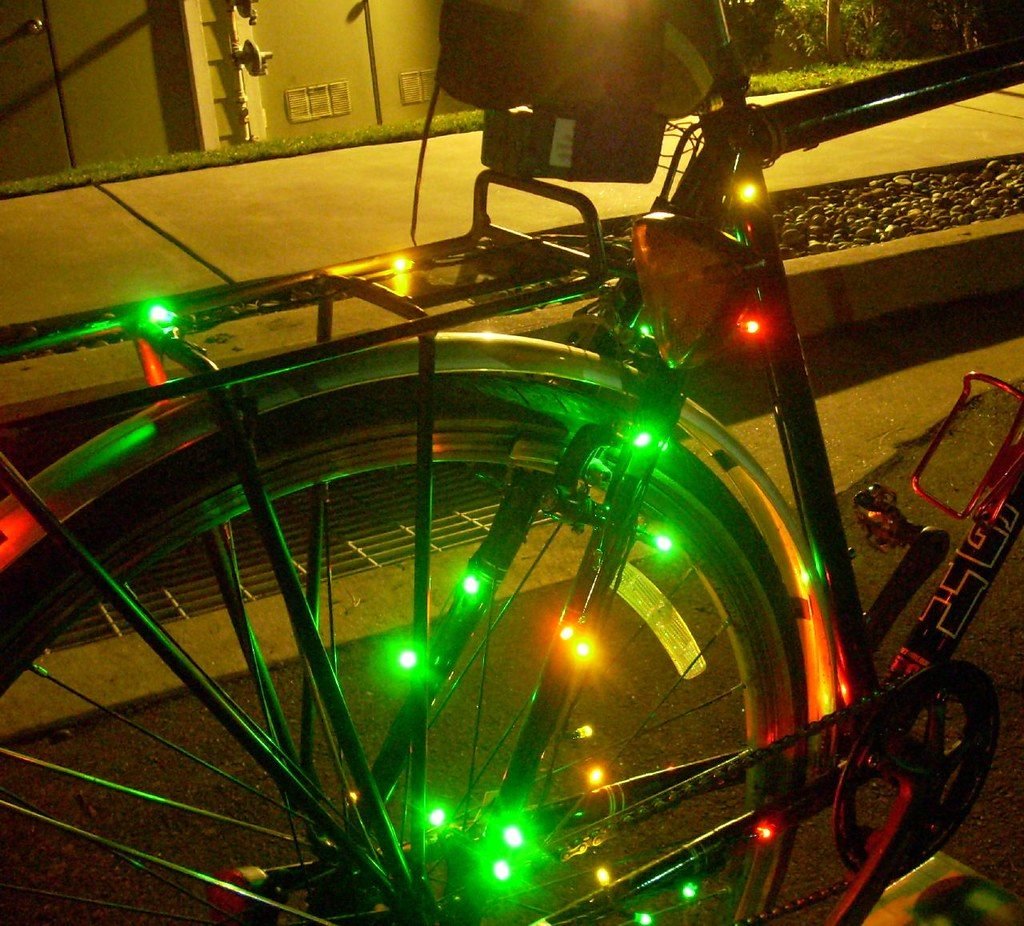
The old designs page showed a handful of images that every blade could display: Spokes, Inverted Flower, Checkerboard, Flower Petals, All Active, and a slot for your own text. All the blades on a wheel switched to the same design at the same moment, and you could let them cycle through the set every ten seconds or so, or lock them on your message.
What made this possible was not a screen. Each blade had only a single line of LEDs running from the hub toward the rim. Everything else was timing.
Persistence of vision
When a bright point of light moves quickly through the dark, the eye does not see a series of separate positions. It sees a streak, because the impression of each position lingers for a fraction of a second while the next one arrives. Sparklers drawing letters at a bonfire use the same effect. So does a fan with LEDs on its blades that appears to show a clock.
A POV display, short for persistence of vision, takes advantage of this. A row of LEDs sweeps through a circle. At each angle of the sweep, a processor decides which LEDs in the row are on and which are off. Do that fast enough, and the eye assembles all the slices into one image.
Why speed matters
The faster the wheel turns, the more often each part of the picture is refreshed, and the more solid the image looks. Below a certain speed, the eye sees a flickering fragment rather than a picture. Adding blades helps, because each part of the circle is swept more often for the same wheel speed. That is why the old FAQ said two blades needed about 12 mph for a full image, while three blades needed only about 7 mph.
The blades also had to know where they were in the rotation, so that each slice of the picture was drawn at the right angle. The infrared link between blades kept them in step with one another, so that the same design appeared across the whole wheel rather than as several overlapping copies.
The designs
The old page named each design and showed it as a small picture. The pictures were not preserved, so the short descriptions below are ours, based on the names and the archived images around them.
| Design | What it looked like |
|---|---|
| Spokes | Bright radial lines, like extra glowing spokes turning with the wheel. |
| Inverted Flower | A flower with petals pointing in toward the hub. |
| Checkerboard | Alternating lit and dark blocks in rings around the wheel. |
| Flower Petals | Rounded petals opening out toward the rim. |
| All Active | Every LED on, a solid disc of color. |
| Display Text | A custom message of up to 16 characters, read around the wheel. |
The designs worked with any color of blade, and with mixed colors on the same wheel. The FAQ suggested three different colors on one wheel as the most striking combination.
POV lights today
The same principle is now used in wheel lights controlled from a phone, which can show photos, animations and scrolling text, and in shop-window displays and spinning "hologram" fans. The basic idea, a single row of lights and very precise timing, has not changed since Hokey Spokes was announced in 2000.